Why Your Wallpaper Feels Like Home: The Emotional Science Behind American Landscape Screens
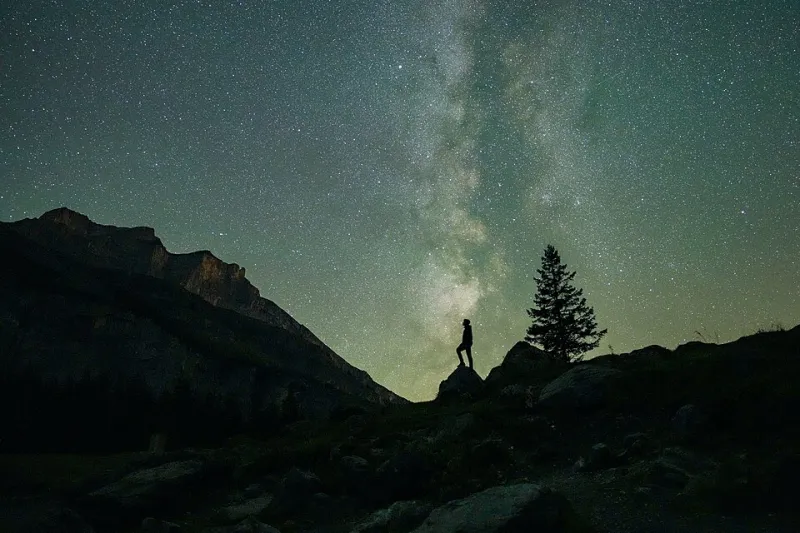
Photo: Giles Laurent, CC BY-SA 4.0, via Wikimedia Commons
You've probably done it without thinking twice. You're setting up a new phone or refreshing your desktop, and out of hundreds of options, you scroll past the abstract gradients and the moody cityscapes until something stops you cold — a ridge of golden aspens in Colorado, maybe, or a sun-drenched stretch of the Outer Banks. You tap it. Done. But why that image?
It turns out the wallpapers we choose reveal a lot more about us than our taste in color palettes. Researchers in environmental psychology have spent years studying how visual representations of natural spaces affect mood, memory, and even our sense of self. And when it comes to American landscapes specifically, the emotional stakes are surprisingly high.
The Brain's Response to Open Spaces
Human beings are wired to respond to nature. That's not a wellness-blog platitude — it's backed by decades of research. Attention Restoration Theory, developed by psychologists Rachel and Stephen Kaplan back in the 1980s, proposes that natural environments help the brain recover from mental fatigue in a way that built environments simply can't. Even looking at images of natural scenes can trigger a mild version of that restorative effect.
For wallpaper users, this plays out in small but meaningful ways throughout the day. Every time you minimize a window or glance at your lock screen, that brief flash of a Montana prairie or a desert canyon isn't just decoration — it's a micro-dose of calm. Environmental designers have started calling this "passive restoration," and it's one reason landscape wallpapers consistently outperform abstract or urban imagery in user satisfaction surveys.
But not all landscapes are created equal, emotionally speaking. The type of scenery you're drawn to often reflects something specific about your psychological state or personal history.
Mountains, Deserts, and Coasts: What Your Chosen Landscape Says
Download data from wallpaper platforms tells a fascinating regional story. Users in landlocked Midwestern states tend to over-index on coastal imagery — ocean cliffs, Gulf sunsets, the rocky shores of Maine. Meanwhile, folks in densely populated East Coast metros show a pronounced preference for wide-open Western landscapes: the sweeping red rock formations of the Southwest, the endless horizon of the Great Plains.
Psychologists call this the "contrast effect" — we're drawn to environments that feel like the emotional opposite of our daily surroundings. If your life is loud, crowded, and fast, a silent desert mesa is practically a form of therapy at arm's length.
Mountain imagery carries its own psychological weight. Peaks like the Grand Tetons or Mount Rainier activate a sense of awe — a well-documented emotional state that researchers at UC Berkeley found can make people feel more connected to something larger than themselves. It's no coincidence that mountain wallpapers spike in downloads during periods of collective stress. People reach for grandeur when they need perspective.
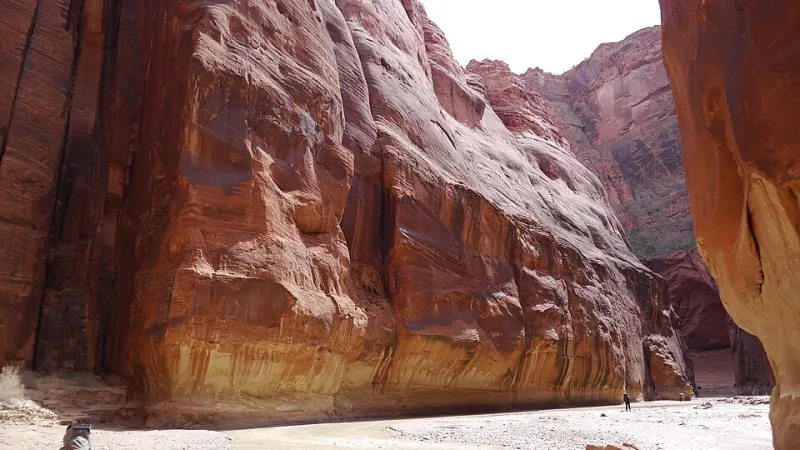
Desert landscapes hit differently. There's a meditative quality to the Southwest's minimalism — the sparse palette of red, ochre, and blue sky strips away visual noise in a way that resonates with users seeking mental clarity. Designers who work with brand identity have noted that clients in high-pressure industries (finance, tech, healthcare) disproportionately favor desert wallpapers for their personal devices.
Coastal imagery, on the other hand, is the most emotionally complex category. Shorelines represent transition — land meeting water, the known meeting the unknown. For many Americans, beach scenes are inseparable from childhood memory and family ritual. That's a powerful emotional cocktail, and it explains why images of places like Cape Cod, Malibu, and the Florida Keys remain perennial wallpaper favorites regardless of trends.
Nostalgia as a Design Force
One of the most compelling threads running through landscape wallpaper psychology is nostalgia — specifically, what researchers call "place-based nostalgia." This is the bittersweet longing not just for a time, but for a location tied to that time.
For Americans, whose culture places enormous value on road trips, summer vacations, and the mythology of wide-open frontier, this kind of nostalgia is practically built into the national DNA. A wallpaper of the Blue Ridge Parkway in autumn doesn't just look pretty — for a certain user, it might summon the specific smell of a grandmother's porch, or the feeling of a family station wagon rolling through fog on a childhood road trip.
This is why designers who create landscape-focused wallpaper collections often talk about the importance of "emotional specificity." The most downloaded images aren't necessarily the most technically perfect photographs. They're the ones that feel lived in — images that leave enough room for the viewer to project their own memory onto the scene.
Regional Identity and the Pride Factor
There's also a dimension of landscape wallpaper choice that's less about psychology and more about identity politics — in the most local sense of that phrase. Choosing a wallpaper of your home state's most iconic scenery is a quiet act of regional pride. It's a way of saying something about where you come from without saying a word.
This phenomenon is especially visible in states with strong regional identities. Texans gravitate toward Big Bend vistas and Hill Country bluebonnets. Alaskans favor images of Denali or the Northern Lights with a fervor that borders on devotional. Pacific Northwesterners reach for the mossy drama of the Hoh Rain Forest or the volcanic geometry of Mount St. Helens.
For these users, a wallpaper isn't just a background — it's a flag. A declaration of belonging.
Designing for Emotional Resonance
If you're thinking about refreshing your screen with something that actually means something to you, it's worth pausing to ask what you're looking for emotionally right now. Craving calm? Reach for open water or a flat desert horizon. Need inspiration or a sense of scale? Mountains and canyon landscapes deliver that awe factor reliably. Missing home — or a version of home you've never quite found? Coastal and forest imagery tends to hit that nostalgic nerve most effectively.
The beauty of American landscape wallpapers is that this country offers every emotional register in the visual spectrum. From the haunting stillness of the Badlands to the jubilant chaos of a Hawaiian shoreline at golden hour, there's a piece of American terrain that matches exactly where your head is at today.
Your screen is small. The country is enormous. And somehow, one image manages to hold a little bit of both.