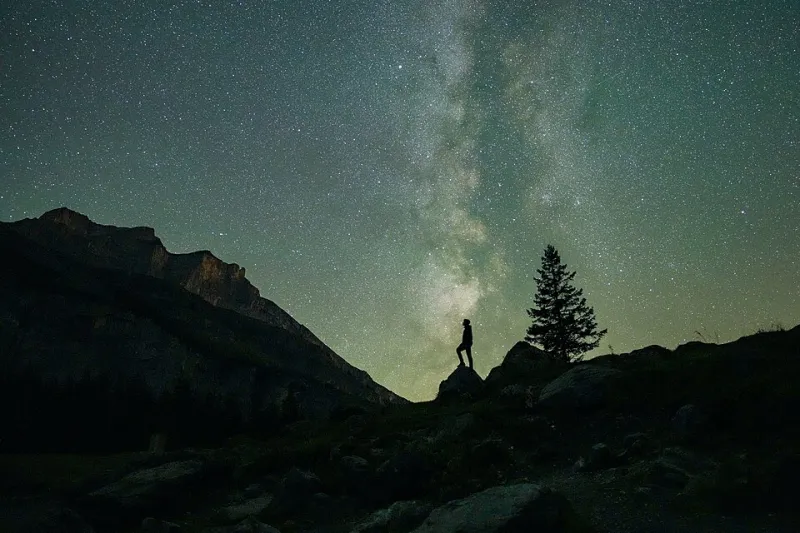
The Algorithm Chose a Dirt Road in Montana: How Social Media Is Writing America's New Wallpaper Map
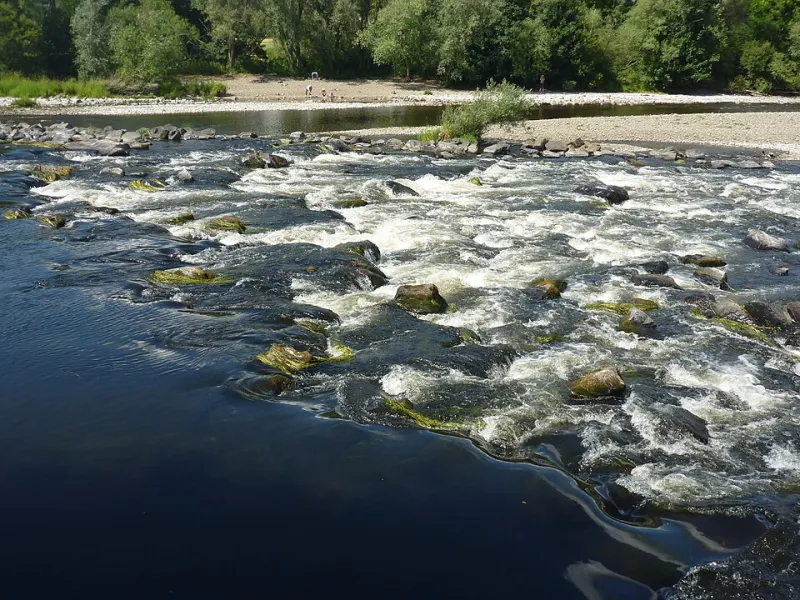
Photo: Richard West , CC BY-SA 2.0, via Wikimedia Commons
Not long ago, the landscapes that ended up on American screensavers were basically chosen by a pretty small group of people: stock photo editors, travel magazine art directors, and whatever Apple decided to ship with the latest OS update. Yosemite Valley. The Grand Canyon. A generic beach at golden hour. Beautiful? Sure. But also deeply predictable.
That era is over.
Today, a 22-year-old photographer pulling off the highway in rural Wyoming can post a single shot to TikTok and, within 72 hours, that image is living on 400,000 phone screens across the country. The wallpaper discovery pipeline has been completely rewired, and the results are genuinely exciting for anyone who cares about American visual culture.
The Death of the Stock Photo Stranglehold
For decades, stock photography platforms functioned as the invisible curators of American digital aesthetics. They decided which landscapes were "wallpaper worthy" based on commercial viability — which images would sell the most licenses to the most clients. That model favored the obvious, the safe, and the already-famous.
Social media broke that model in the most democratic way possible: by letting the audience decide.
"The algorithm doesn't care if a location is famous," says one landscape photographer based in Bozeman, Montana, who's amassed a significant following on Instagram. "It cares if the image stops people from scrolling. And sometimes the most scroll-stopping shot is a place nobody's ever seen before."
This shift has had real geographic consequences. Places that would never have made it past a stock photo editor's desk — a frost-covered barn in Nebraska, a sea cave on the Oregon coast, a lightning storm rolling over the Oklahoma panhandle — are now regularly going viral and landing on people's desktops.
Pinterest's Quiet Wallpaper Revolution
While TikTok and Instagram get most of the attention in conversations about social media influence, Pinterest deserves serious credit for reshaping American wallpaper culture. The platform's save-and-collect mechanic is almost perfectly designed for wallpaper discovery — users stumble onto an image, immediately imagine it on their screen, and save it to a board labeled something like "phone backgrounds" or "desktop inspo."
Pinterest trend data has consistently surfaced aesthetic movements before they hit mainstream awareness. The cottagecore Americana wave — think wildflower meadows, weathered farmhouses, soft-focus golden hour fields — was building on Pinterest boards for months before it became a recognizable cultural moment. Same with the moody, desaturated Pacific Northwest aesthetic that dominated a certain corner of wallpaper culture for a good two years.
What's interesting is how these Pinterest-born aesthetics eventually influence what people search for on wallpaper sites. The platform functions almost like an early warning system for visual trends.
The Aesthetic Categories Taking Over
So what's actually gaining momentum right now? A few distinct visual languages are dominating the social-to-screen pipeline.
Cottagecore Americana leans into romanticized rural imagery — old barns, dirt roads lined with wildflowers, soft morning light over a farmhouse porch. It's nostalgic without being kitschy, and it performs particularly well with audiences who are craving a slower, more grounded visual experience to counterbalance the speed of digital life.
Modern Minimalist Landscapes are doing the opposite — stripping scenes down to their essential geometry. A single tree on a flat horizon. A road disappearing into a pale desert. These compositions resonate with users who want a wallpaper that doesn't compete with their app icons and notifications. Clean, architectural, and weirdly calming.
Urban Sunset Photography has become its own genre, driven largely by city-based creators who've realized that the skylines and rooftops around them are legitimate landscape subjects. A shot of Chicago's lakefront at dusk or the LA Basin glowing gold from the Griffith Observatory hits differently than a traditional wilderness scene — it's aspirational in a more accessible way.
Dark and Dramatic Weather is having a serious moment. Thunderstorm cells over the Great Plains, fog rolling through the Appalachians, moody overcast light on a Pacific coastline — this aesthetic speaks to a growing appetite for wallpapers that feel powerful rather than pretty.
The Creator Economy's Geographic Effect
One of the most fascinating downstream effects of social media's influence on wallpaper culture is what it's doing to the map of "discovered" America. The traditional wallpaper canon was geographically clustered — the Pacific Coast, the Rockies, the Northeast in fall, a handful of iconic Southwest locations. Social media is filling in the gaps.
Creators in the Midwest are building audiences by showcasing the genuine visual drama of the Great Plains. Photographers in the Gulf South are getting real traction with bayou and coastal marsh imagery that traditional travel media largely ignored. Small-town America — grain elevators, water towers, main streets at dusk — is getting a legitimate aesthetic reconsideration.
"I grew up thinking my part of the country wasn't photogenic," says one creator based in rural Kansas whose landscape photography regularly generates tens of thousands of saves and shares. "Social media proved that wrong. People are hungry for images of places they've never seen. Familiar landmarks are great, but there's something about discovering a place through a photo that makes people want to carry it with them."
That last point is key. The wallpaper impulse — the desire to put an image on your screen and live with it — is fundamentally about connection. Social media discovery creates that connection in a way that browsing a stock library never could. When you find a stunning shot of a place through a creator's feed, you're not just seeing a landscape. You're seeing it through someone's eyes, at a specific moment, with a specific emotional quality.
That story is what makes an image worth keeping on your screen.
What This Means for American Visual Culture
The social media wallpaper pipeline is, at its best, a genuinely grassroots form of landscape appreciation. It's distributed, it's diverse, and it's constantly refreshing itself with new places, new aesthetics, and new ways of seeing familiar terrain.
The old gatekeepers aren't gone entirely — major platforms still shape what gets amplified and what doesn't. But the range of what's possible has expanded dramatically. A stunning image of a forgotten road in rural Alabama now has the same shot at ending up on a million screens as a postcard-perfect shot of the Grand Tetons.
For a country as visually rich and geographically varied as the United States, that feels like exactly the right development. There's a lot of America out there that deserves a spot on your screen.
The algorithm is finally starting to find it.