Tornado Alley's Finest: Meet the Photographers Behind America's Most-Saved Sky Wallpapers
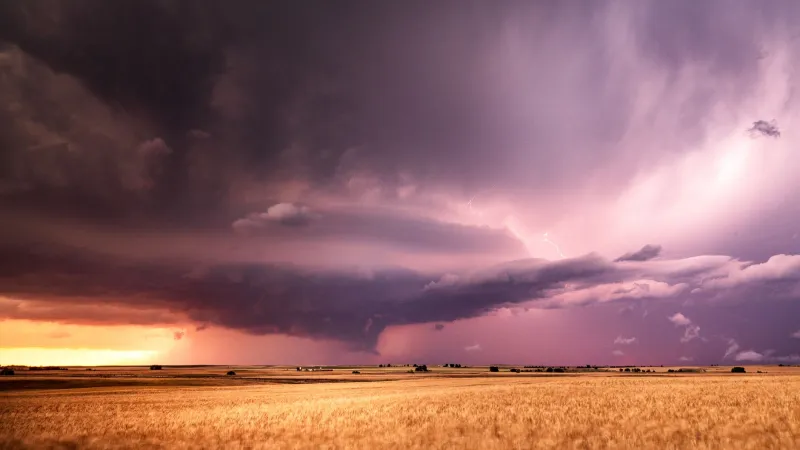
There's a particular kind of image you've probably seen a hundred times without ever thinking about where it came from. A supercell glowing teal and gold over a Nebraska cornfield. A lightning bolt splitting the sky above a lonely Texas two-lane. The Milky Way's core rising like smoke over the badlands of South Dakota.
These shots dominate the most-downloaded lists on wallpaper sites across the country, and ours is no exception. But behind every one of them is a person who drove six hours on a gamble, sweated through a 90-degree afternoon in a rented truck, and waited — sometimes for days — for the sky to cooperate.
The Unglamorous Truth About Glamorous Skies
Ask any storm photographer about their work and the first thing they'll tell you is what it isn't: it isn't dramatic in the moment. It's gas station coffee at 4 a.m. It's radar apps, hail forecasts, and knowing exactly which county road offers a quick escape route. The drama happens later, on your screen.
Mike Hollingshead, a Nebraska-based chaser who's been shooting supercells since the early 2000s, describes the typical chase day as "90 percent driving and 10 percent panic." That panic — repositioning the car, swapping lenses as a storm suddenly organizes — is where the images live. The famous turquoise-and-amber color palette of a Great Plains supercell at sunset can't be faked, and it can't be scheduled. You earn it.
The same goes for astrophotography. The photographers shooting the Milky Way over Utah's dark-sky parks are working in the dead of night, often in sub-freezing desert temperatures, shooting dozens of frames to stack into one noise-free image. A wallpaper you downloaded in eight seconds might represent fourteen hours of fieldwork and a week of editing.
Why These Images Own Our Screens
There's a reason storm and night-sky wallpapers consistently outperform sunsets and beaches. Part of it is scale — a supercell is the largest single object most of us will ever see depicted. Part of it is the color science: the greens, teals, and violets in severe weather photography simply don't appear in calmer skies, so the images look almost painterly on a high-resolution display.
But there's something deeper, too. A wallpaper of a storm is a wallpaper of power held at a respectful distance. You get the awe without the tornado warning. For Americans in Tornado Alley, these images can even carry a note of home — the plains they grew up under, rendered beautiful instead of threatening.
Shooting Your Own Sky Wallpaper
If the gallery below inspires you to grab a camera instead of a download, here's the honest starter kit:
-
For lightning: A tripod, a shutter release, and patience. Set a long exposure (10–25 seconds) during active storms and let the sky do the work. Never shoot from an exposed spot.
-
For supercells: Don't chase alone, and don't chase at all without learning storm structure and safety first. Local National Weather Service spotter training is free and genuinely useful.
-
For the Milky Way: You need a new-moon night, a dark-sky location (check the International Dark-Sky Association's map — the Southwest is loaded with them), a wide lens at f/2.8 or faster, and exposures under 20 seconds to keep the stars sharp.
-
For everyone: Shoot in RAW. The difference between a JPEG sky and a RAW sky, after editing, is the difference between a snapshot and a wallpaper.
Licensing and Crediting
One thing the wallpaper community doesn't talk about enough: many of the most iconic storm images floating around online are unlicensed. If you're using a photographer's work commercially or on a company machine, buy the license. Most chase photographers sell prints and digital licenses directly through their sites, often for less than the cost of a tank of gas. Supporting them is what keeps the next chase — and the next great sky — on the road.
Until then, every time you unlock your phone and see that impossible wall of cloud on the horizon, spare a thought for the person who was actually there — awake, alert, and a safe distance from the hail.