City Glow vs. Open Sky: What Your Wallpaper Picks Reveal About Your American Dream
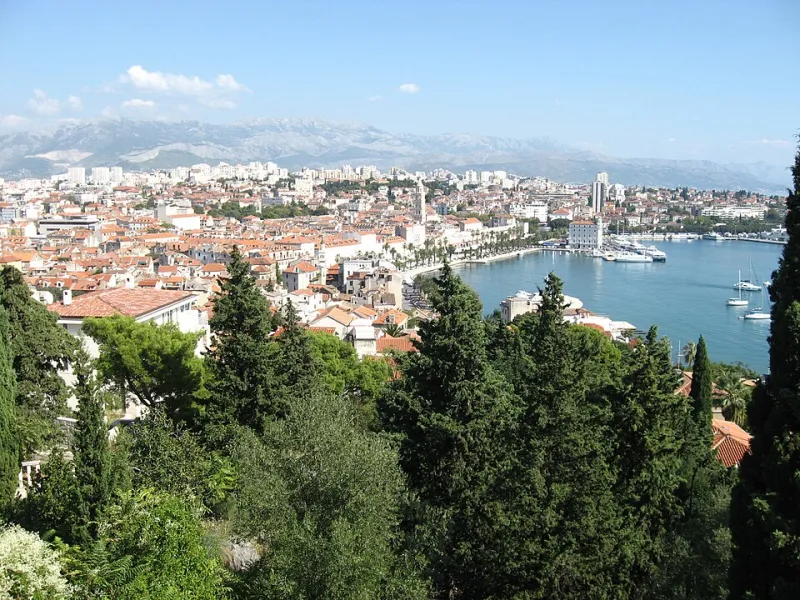
Photo: Smiley.toerist, CC BY-SA 4.0, via Wikimedia Commons
Open your phone right now. What's on your screen?
Maybe it's the Manhattan skyline at dusk, all lit up like a circuit board somebody dropped into the Hudson. Or maybe it's a wheat field in Kansas catching the last ten minutes of golden hour, so quiet you can almost hear it. Either way, that image didn't land on your screen by accident. You picked it—or at least, you let it stick around. And in a country as sprawling and complicated as this one, that choice carries a little more weight than most people realize.
The wallpaper divide between urban skylines and wide open spaces is real, it's measurable, and honestly, it's kind of fascinating.
Two Visions of the Same Country
America has always told itself two stories at once. There's the story of the city: ambition, density, reinvention, the electric hum of a million people doing a million different things. And then there's the other story—the one about space, solitude, self-reliance, and landscapes so big they make your problems feel manageable by comparison.
Both stories are genuinely American. But the wallpaper you choose suggests which one you're living in right now.
Urban wallpapers tend to dominate among younger users, particularly those in coastal metros or mid-sized cities going through a growth surge. Think Chicago's lakefront at blue hour, the neon blur of Times Square, or a rooftop view of Los Angeles fading into smog-filtered purple. These images are energetic. They imply motion, even when they're still.
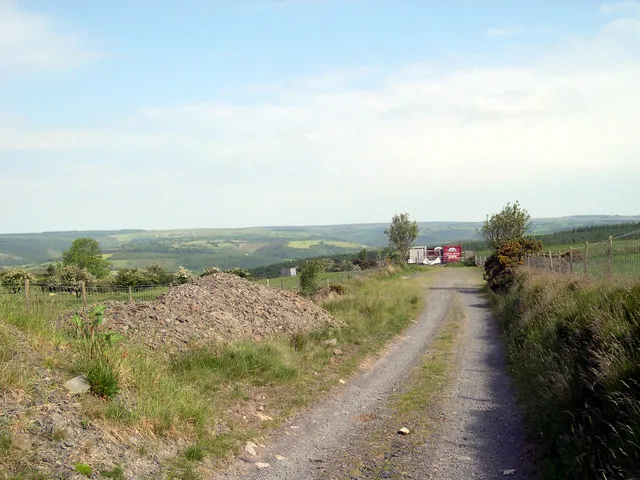
Rural and natural landscapes, on the other hand, pull in a broader demographic cross-section than most people expect. Yes, they're popular in the South and the Mountain West. But they also rank consistently high among urban dwellers who spend their days staring at concrete—people who use their screen background as a kind of emotional escape hatch.
The Psychology of What You're Drawn To
Here's where it gets interesting. Researchers who study environmental psychology have long known that humans respond differently to dense, stimulating environments versus open, restorative ones. Cities trigger alertness and social awareness. Natural landscapes—especially ones with visible horizons—tend to lower cortisol levels and invite what scientists call "soft fascination," a gentle, wandering kind of attention that lets your brain decompress.
When you set a wallpaper of the Badlands or a misty Appalachian ridge, you might just think you're picking something pretty. But your nervous system is registering something closer to a micro-vacation.
Urban wallpapers work differently. They're aspirational in a specific way—they say I belong to this, or I want to. A skyline shot of Seattle or Atlanta on your lock screen is almost a statement of identity. It's civic pride compressed into pixels.
Neither impulse is better or worse. But they are different, and they're getting more distinct.
Is the Divide Getting Wider?
It's hard to look at American cultural life right now and not notice that a lot of things are sorting themselves out along urban-rural lines. Food culture, media consumption, political affiliation, even the kind of humor that lands—all of it seems to be cleaving more sharply than it did twenty years ago.
Wallpaper trends are no exception.
Over the past few years, searches for sweeping natural American landscapes have spiked significantly—and not just during the pandemic, when everyone suddenly wanted to stare at something that wasn't their apartment. The appetite for big-sky imagery, empty highways, and untouched wilderness has maintained real staying power. Meanwhile, architectural and urban photography has become more stylized, more curated, more consciously aesthetic. The gap between "city wallpaper people" and "nature wallpaper people" isn't just about taste anymore—it's starting to feel like two different visual languages.
Some designers we've talked to describe it as a kind of screen-level version of the urban-rural empathy gap. You choose images that reflect the world you understand, or the world you're trying to reach.
The Crossover Cases (And Why They Matter)
Not everyone fits neatly into one camp, and those crossover preferences are worth paying attention to.
There's a whole category of wallpaper that bridges the divide: images of small American cities at magic hour, or aerial shots where farmland meets a grid of suburban streets, or the kind of photo you get when a thunderstorm rolls over Denver and the mountains and the skyline end up in the same frame. These images are wildly popular, and they suggest that a lot of Americans aren't actually choosing sides—they're holding both stories at once.
There's also the nostalgia angle. Route 66 imagery, for instance, threads the needle perfectly—it's the American road, which is neither city nor wilderness but the connective tissue between them. Images of small-town main streets, grain silos at sunrise, or a two-lane highway disappearing into the desert carry a kind of emotional neutrality that urban skylines and pure wilderness shots sometimes can't match.
What It Means for How We See America
Wallpaper is a low-stakes choice. Nobody's voting or signing a petition when they set their home screen. But the images we surround ourselves with—even casually, even unconsciously—shape the mental models we carry around all day.
If your screen shows you a city every time you check the time, you're getting a small, repeated reminder that America is dense, dynamic, and human-made. If it shows you a mesa in Utah or a fog-covered valley in the Smokies, you're getting a different reminder: that America is also ancient, vast, and largely indifferent to whatever's stressing you out today.
Both reminders are worth having. The question is which one you need more right now—and whether the country might benefit from a few more people keeping both on rotation.
Maybe that's the real move: stop picking a side and let your screen show you the whole thing.