From Factory Default to Fully Yours: The Movement Reshaping American Screens
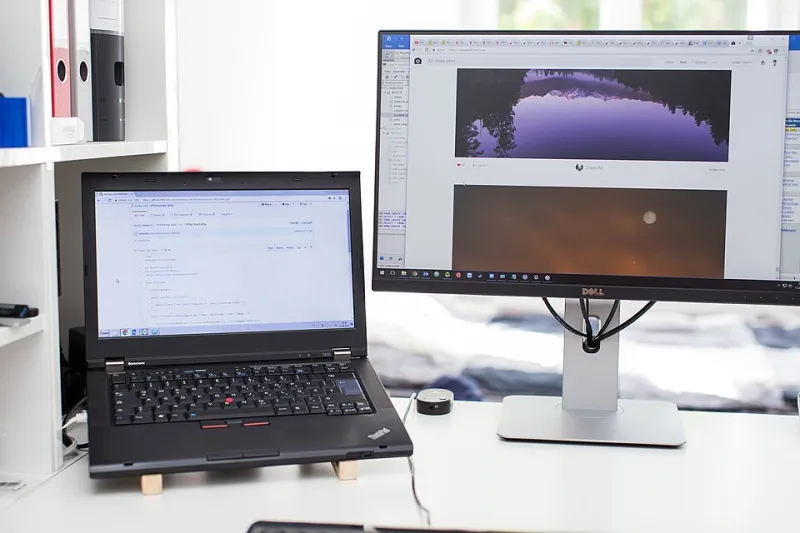
Photo: Taduuda taduuda, CC0, via Wikimedia Commons
For years, millions of Americans powered on their laptops and phones to the same uninspired image — a blurry mountain range, a stock gradient, or whatever tech company logo happened to ship with the device. Nobody chose it. Nobody loved it. It was just... there. But somewhere between the pandemic reshaping our daily lives and TikTok turning aesthetic curation into a competitive sport, something changed. Americans stopped accepting the default. And honestly? It's one of the more interesting cultural shifts happening right now.
The Pandemic Didn't Start This — But It Lit the Match
Let's be real: remote work cracked the door open. When your laptop became your office, your classroom, your social life, and your entertainment hub all at once, you started paying a lot more attention to what was on that screen. Not just what was on it in terms of apps and tabs, but what the screen itself looked like when it was sitting idle on your kitchen table at 7 a.m. with a cup of coffee in front of it.
Suddenly, that default blue gradient felt a little depressing. People started swapping it out — first for family photos, then for travel shots they'd been meaning to do something with, and eventually for genuinely gorgeous landscape photography that made the whole setup feel a little more intentional. Screen time surged during those years, and with it came a heightened awareness of the visual environment we were spending our days inside.
The numbers back this up. Studies tracking app downloads during 2020 and 2021 showed massive spikes in wallpaper and digital customization apps. Americans weren't just consuming content differently — they were rethinking the canvas itself.
Your Screen Is Your Space Now
Here's a way to think about it: your wallpaper is basically the equivalent of hanging something on your wall. Interior designers have known forever that what you put on your walls communicates something about who you are and what you value. Your home office, your dorm room, your apartment — the images you choose to live with say something.
Screens are walls now. We spend more time looking at our phone and laptop backgrounds than we do at most of the actual art in our homes. That realization has quietly but genuinely changed the calculus. If you're going to stare at something for eight-plus hours a day, why shouldn't it be something that actually moves you?
For a lot of Americans, that's meant turning to landscapes and landmarks that feel personally meaningful. A surfer in San Diego might have a shot of the Pacific at golden hour. Someone from rural Kentucky might keep a photo of rolling horse country on their desktop. A New Yorker might cycle through skyline shots depending on their mood. The wallpaper has become a small, daily act of placing yourself in a world you actually want to inhabit.
Social Media Made It a Conversation
Another piece of the puzzle: sharing. Platforms like Instagram, Pinterest, and more recently BeReal and various subreddits dedicated to home office setups have turned your digital workspace into something you might actually show other people. "Battlestation" culture — where people photograph and share their entire desk setup — made the wallpaper visible in a new way. It's in the background of every photo. People started noticing.
When your setup is shareable, suddenly every element of it becomes a choice worth making. The wallpaper isn't just for you anymore — it's part of the aesthetic presentation of your whole life. That sounds a little intense when you say it out loud, but it's genuinely how a lot of younger Americans are thinking about their digital environments. Intentionality is the word that keeps coming up.
And the content that performs well in these spaces? Overwhelmingly, it skews toward striking natural imagery — wide-open Western landscapes, dramatic coastlines, iconic cityscapes at dusk. American scenery, in particular, has a real moment right now. There's something happening culturally where people want to feel connected to the physical country, even when they're spending most of their time indoors and online.
The Aesthetic Economy Behind the Shift
It's worth noting that this isn't happening in a vacuum. There's a whole ecosystem that's grown up around digital customization — from independent photographers selling wallpaper packs on platforms like Gumroad and Etsy, to apps that curate and rotate wallpapers automatically, to communities on Reddit and Discord where people trade their favorite finds. What was once a niche hobby has become something closer to a mainstream design sensibility.
The rise of 4K and high-resolution displays has also raised the stakes. When your monitor can render every pixel of a Rocky Mountain sunrise in jaw-dropping clarity, a blurry stock gradient starts to feel genuinely offensive. People have developed sharper eyes for image quality because their screens have gotten better, and that's pushed demand for wallpapers that are actually worthy of the hardware.
Why American Landscapes Keep Winning
If you spend any time browsing what's actually popular in the wallpaper space right now, a pattern emerges pretty quickly: American landscapes are having a serious moment. The American Southwest with its otherworldly rock formations. The Pacific Northwest's moody, fog-laced forests. The Great Plains stretching out under a sky so big it barely fits on a widescreen monitor. The Appalachians in full fall color.
There's something almost nostalgic about it, but it doesn't feel backward-looking. It feels more like reclamation — a way of holding onto something real and vast and beautiful in a digital world that can sometimes feel a little unmoored. Putting a photograph of the Grand Tetons on your screen isn't just decorating. It's a small statement about what you find worth looking at.
And for a site like USA Wallpaper, that's exactly the point. The country is genuinely, staggeringly beautiful. From the salt flats of Utah to the bayous of Louisiana to the granite coastline of Maine — there's no shortage of imagery that can stop you mid-scroll and make you feel something. The shift toward intentional wallpaper culture just means more Americans are finally letting that beauty into their daily digital lives.
The Default Era Is Over
Here's where we land: the default wallpaper was never really neutral. It was just a choice made by a corporation on your behalf. What's happening now is that people are taking that choice back — and filling it with something that actually reflects who they are, where they're from, or where they want to be.
That's not a small thing. In a world where so much of our environment is algorithmic and pre-packaged, choosing your own wallpaper is one of the few genuinely personal design decisions most of us make every day. It's low stakes and high frequency — which is exactly the combination that tends to matter more than we think.
So if you're still rocking whatever came pre-loaded on your device, consider this your nudge. Your screen deserves better. And honestly? So do you.