Same Country, Different Screens: How Where You Live Shapes the America You Want to See
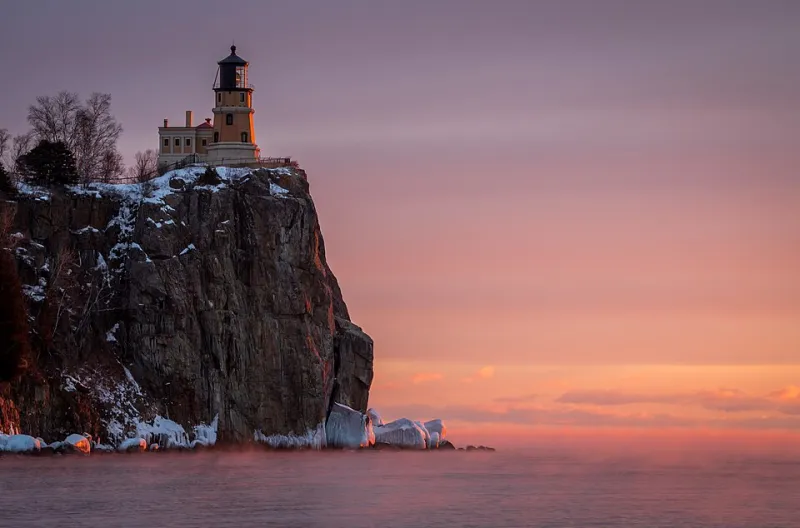
Photo: MichaelDPhotos, CC BY-SA 4.0, via Wikimedia Commons
There's a moment every morning when you unlock your phone and, for just a split second, you see it — your wallpaper. Maybe it's a sun-scorched mesa in Arizona. Maybe it's the Manhattan skyline at blue hour. Maybe it's an eagle mid-flight over a lake so still it looks like glass. Whatever it is, you picked it. And that choice, small as it seems, says something.
We've been digging into wallpaper trends across the country, and what we found is fascinating, a little surprising, and honestly kind of beautiful: the America people put on their screens is deeply shaped by where they live — and what they believe.
The Visual Language of Red and Blue America
Let's start with the obvious stuff, because yes, it's real. Designers and photographers who sell digital wallpapers online have started noticing geographic clustering in what sells where. Packs featuring wide-open prairies, American flags snapping in the wind, log cabins framed by mountain ranges, and golden wheat fields consistently perform stronger in rural Midwest and Southern markets. Meanwhile, collections showcasing diverse urban architecture, Pride-flag-lit city bridges, coastal cliffs, and National Park abstracts tend to move faster on the coasts and in major metros.
"It's not that one group loves America more," says a graphic designer based in Nashville who asked to remain anonymous. "It's that they love different Americas. And both versions are genuinely beautiful."
That distinction matters. This isn't a story about who's more patriotic. It's a story about aesthetic identity — and how profoundly personal that is.
Landscapes as Ideology
Think about what a landscape communicates beyond just its visual appeal. A lone ranch house under a massive Montana sky isn't just pretty — it signals self-reliance, space, quiet, and a certain kind of freedom. A mural-covered wall in Austin or a fire escape in Brooklyn dripping with plant life says something entirely different: community, creativity, density, and a different kind of freedom.
Social media data backs this up. Wallpaper-sharing communities on Reddit and Pinterest show distinct geographic flavor when you sort by engagement. Posts tagged with flyover-country landscapes — the Badlands, the Ozarks, the Palouse hills of eastern Washington — draw heavy engagement from users in rural zip codes. Posts showcasing urban energy, coastal fog, or culturally specific imagery (think Mardi Gras colors or Chicago's Bean at dusk) tend to spike in more densely populated, politically mixed metros.
Jennifer Calloway, a freelance photographer based in Denver who sells wallpaper packs on her website, put it plainly: "I have two collections. One is all high desert and big sky stuff. The other is more urban texture — graffiti, architecture, light through fire escapes. They sell in almost completely different markets. Same country. Totally different customers."
The Symbols We Choose (and the Ones We Don't)
Beyond landscapes, symbolism gets even more interesting. The American flag, for instance, is a wallpaper staple — but how it appears differs dramatically by region and, by extension, political lean.
In more conservative markets, flag wallpapers tend toward clean, traditional presentations: flags on poles, waving against blue skies, or paired with military imagery. In more progressive urban markets, the flag appears more often in artistic reimaginings — overlaid on natural scenes, rendered in watercolor, or incorporated into designs celebrating multicultural America.
"Both groups are wrapping themselves in the flag," notes Marcus Webb, a UI designer in Portland who studies digital aesthetics. "They just want a different version of what that flag represents. The wallpaper becomes a kind of personal manifesto."
And it's not just flags. Statues, monuments, and historical landmarks carry their own freight. The Lincoln Memorial is popular almost everywhere, but the context in which it appears — whether it's a solitary, reverent shot or surrounded by crowds at a march — changes its meaning entirely.
When Preferences Actually Overlap
Here's where it gets genuinely heartwarming: there's a massive overlap zone, and it might be bigger than you think.
National Parks are the great equalizer. Yosemite, the Grand Canyon, Great Smoky Mountains, Glacier — these landscapes crush it everywhere, across every demographic and every political geography. When we looked at the most universally downloaded wallpaper categories on sites like Unsplash and Wallpaper Engine, National Park imagery consistently topped the charts regardless of region.
"There's something about those places that belongs to everyone," says Calloway. "They're ours collectively. I think people feel that."
Sunsets are another universal. Doesn't matter if you're in Tuscaloosa or Tacoma — a killer sunset over American soil gets saved to the camera roll. Same goes for wildlife photography: bald eagles, white-tailed deer, coastal pelicans. Nature, it turns out, is genuinely bipartisan.
The Micro-Regional Thing Nobody Talks About
Zoom in even further and the story gets more granular. It's not just red versus blue — it's neighborhood versus neighborhood, county versus county. Wallpaper preferences in South Texas look different from those in North Texas. The Pacific Northwest has its own distinct visual vocabulary compared to Southern California, even though both are deep-blue states.
"People want their specific place," says Webb. "Not just 'the West Coast' — they want their beach, their mountain, their neighborhood mural. Hyper-local is huge right now."
This hyper-local impulse cuts across political lines entirely. A farmer in rural Kansas and a barista in Brooklyn might disagree on a lot, but both of them want their screen to feel like home — their actual, specific, lived-in home. That's a deeply human thing, and it shows up clearly in wallpaper culture.
What This Means for How We See Each Other
Maybe the most interesting takeaway here isn't about division — it's about the fact that everyone is doing the same thing. We're all curating a version of America that feels true to us. We're all reaching for beauty and meaning and identity through the images we choose to look at every single day.
The red-state rancher who wakes up to a sunrise over the Flint Hills and the blue-city renter who unlocks to a neon-lit corner in New Orleans are both saying: this is my country, and it's beautiful. They're just pointing at different parts of the map.
And honestly? That's kind of the whole story of America right there — a massive, gorgeous, complicated country that means something slightly different to everyone who calls it home.
Your wallpaper is your vote for which version of America deserves to be seen. Choose it with intention. Because the view you carry with you shapes the country you believe in.