When the Wallpaper Becomes the Destination: America's New Screen-to-Highway Movement
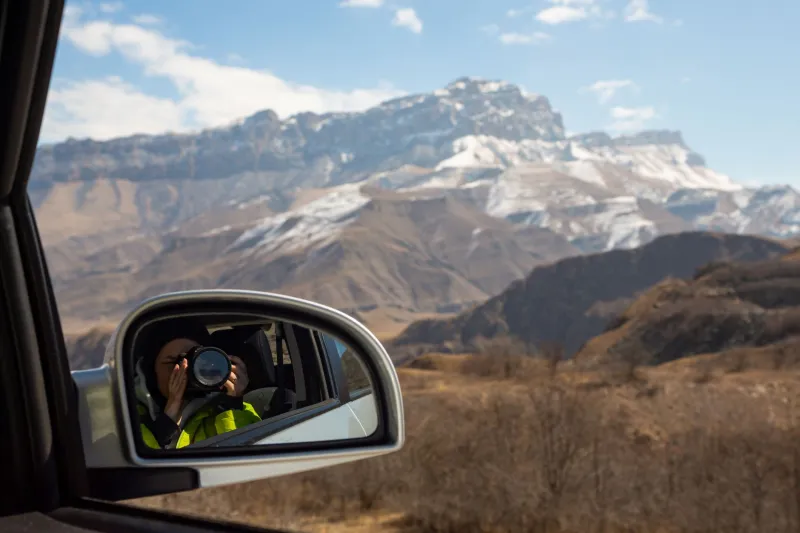
It started, as so many modern obsessions do, with a phone screen.
Danielle Marsh, a 34-year-old graphic designer from Columbus, Ohio, had been staring at the same wallpaper for three months — a sweeping shot of the Maroon Bells outside Aspen, Colorado, taken at golden hour, the twin peaks reflected in a glassy alpine lake. She didn't know who took it. She'd downloaded it from a wallpaper site, set it as her lock screen, and promptly forgot about it. Until one Tuesday morning in February, sitting in traffic on I-270, she glanced at her phone and thought: I need to actually go there.
By June, she had. And she wasn't alone when she arrived.
"There were at least a dozen people at the lake at 5 a.m.," she laughs. "All of us with our phones out, all of us clearly chasing the same shot. We didn't even have to explain ourselves to each other."
What Danielle stumbled into is something tourism researchers and travel bloggers are only just beginning to name: the wallpaper pilgrimage. It's the phenomenon of Americans traveling — sometimes hundreds, sometimes thousands of miles — to visit places they first encountered as a background image on a screen. And it's reshaping how people think about both travel and the images they choose to live with every day.
A Screen Full of Wanderlust
The connection between photography and tourism isn't new. People have been chasing Ansel Adams shots in Yosemite for decades. But the wallpaper economy has turbocharged something older and made it deeply personal.
When you set an image as your wallpaper, you're not just decorating a device. You're choosing something to look at dozens — sometimes hundreds — of times a day. That kind of repeated exposure does something to a person. Landscape psychologists call it "place attachment by proxy," a phenomenon where you develop genuine emotional bonds with locations you've never physically visited, simply through sustained visual exposure.
In other words: your wallpaper might be quietly convincing you that you belong somewhere you've never been.
Marcus Webb, a 41-year-old high school history teacher from Baton Rouge, Louisiana, felt that pull toward the Oregon Coast. He'd been cycling through Pacific Northwest wallpapers for two years — dramatic sea stacks at Cannon Beach, foggy headlands, the kind of moody coastal light that looks almost fictional. "I kept thinking, that can't be real," he says. "It looks too good. So I went to find out."
He drove the entire Oregon Coast Highway last summer. Took two weeks off work. Brought his own camera.
"Every overlook felt like déjà vu," he says. "I'd seen versions of these views a thousand times. But standing there, smelling the salt air, hearing the waves — that was the part no wallpaper could prepare me for."
The Shot Heard 'Round the Algorithm
Social media and wallpaper culture have developed a feedback loop that's hard to untangle. A photographer captures something extraordinary in, say, the Palouse Hills of eastern Washington — those rolling, patchwork farmlands that look like a painting. The image circulates, gets downloaded as a wallpaper, gets shared, goes semi-viral, and suddenly a remote agricultural region starts seeing a measurable uptick in visitors.
This isn't hypothetical. Tourism boards in states like Montana, Utah, and Idaho have quietly noted the correlation between certain images going viral in design communities and spikes in visitor inquiries. The Palouse is a real example — it's been on photography pilgrimage lists for years, largely because a handful of iconic shots keep circulating through wallpaper and screensaver culture.
The Bonneville Salt Flats in Utah are another. So is the painted desert landscape around Petrified Forest National Park in Arizona. These aren't necessarily the most-visited places in America, but they're among the most wallpapered — and the gap between those two things is closing.
Capturing Your Own Version
For a growing segment of these travelers, the goal isn't just to see the place. It's to come home with their own shot — their personal, unrepeatable version of the image that inspired them.
Jasmine Tran, a 28-year-old from Houston, Texas, has built what she calls her "personal wallpaper archive" over the past four years of road trips. She started when she realized she was tired of using other people's versions of American beauty on her own devices.
"There's nothing wrong with downloading a great shot," she says. "But there's something different about having a photo you took yourself, of a place you drove twelve hours to reach, on your screen every day. It means something."
Her archive now includes dawn shots from Great Sand Dunes National Park, storm-light photos from the Texas Hill Country, and a series from the Blue Ridge Parkway taken during peak fall color. Every single one is her lock screen at some point during the year.
This DIY approach to wallpaper culture is quietly influencing how people plan trips. Rather than building itineraries around restaurants or bucket-list attractions, some travelers are building them around light — the quality of morning sun at a particular canyon, the way late afternoon falls on a certain stretch of highway. It's tourism filtered through a photographer's eye, and the smartphone has made that accessible to anyone.
What This Means for American Landscapes
There's a real tension embedded in all of this, and it's worth naming honestly. When a location becomes famous as a wallpaper destination, the foot traffic follows. Horseshoe Bend in Arizona is one of the most-downloaded landscape wallpapers in the country — and it now requires timed entry permits because the crowds became unmanageable. The very images that make people fall in love with wild, untouched places can accelerate the conditions that make them feel less wild and less untouched.
Still, most people who've made these pilgrimages describe something that feels more like reverence than consumption. The sustained daily intimacy of a wallpaper — that repeated visual relationship with a place — seems to generate genuine respect for what they find when they arrive.
"You don't trash a place you've been staring at lovingly for six months," Danielle Marsh says simply. "You show up wanting to protect it."
The Road Keeps Going
America is enormous, and its landscapes are genuinely, almost aggressively varied. From the volcanic coastline of Hawaii to the cypress swamps of Louisiana, from the ancient red rock of the Colorado Plateau to the windswept barrier islands of the Outer Banks — there is no shortage of wallpaper-worthy real estate in this country.
What the screen-to-highway movement suggests is that wallpapers aren't just passive decoration. They're invitations. They're quiet, persistent nudges toward a version of America you haven't experienced yet — sitting right there on your lock screen, waiting for you to follow through.
So the next time you download a wallpaper of somewhere you've never been, maybe ask yourself: what would it take to actually go?
The road's already in your pocket. You just have to unlock it.